About us
Who we are
We are a team of change-makers who believe that every helping hand can raise a Farmer and create a better future for them.
The peasant movement during the British period is the product basically of the new feudal system introduced by the British colonial rulers. And the feudal system is closely related with the Permanent Settlement of 1793.
This was a settlement made with the landlords; Lord Cornwall’s started a decennial settlement in 1789, which was completed in 1791. It was completed in 1793.
Our Mission
Our Vision
Our mission is to Empower farmers and agricultural workers across India by protecting their rights, strengthening rural livelihoods, and promoting fair agricultural policies. Through collective action, advocacy, and awareness, we work to eliminate economic exploitation, ensure equitable land rights, and support sustainable farming practices that improve the lives of millions of farmers.
Our vision is to build a just, sustainable, and farmer-centric agricultural system inn India,where every cultivator has secure land rights, fair income, and access to resources necessary for dignified living. We strive for a future where farmers are recognized as the backbone of the nation and their voices shape agricultural policies and rural development.


Our History Timeline (1936 → Present)
1793 – Colonial Agrarian Policies Begin
The British Permanent Settlement created a feudal land system that deprived cultivators of land ownership and empowered zamindars, leading to widespread exploitation of peasants.
18th–19th Century – Early Peasant Revolts
Several peasant revolts such as the Sanyasi Revolt, Indigo Revolt, and tribal uprisings emerged across India as farmers resisted colonial exploitation and excessive taxation.
1918 – Early Kisan Sabhas Formed
The first organized farmer groups and Kisan Sabhas began emerging in regions such as Uttar Pradesh, bringing farmers together to demand rights and policy reforms.
1920–1935 – Organized Peasant Movements
Mass movements like the Bardoli Satyagraha and regional farmer struggles strengthened the unity of peasants and connected their issues with the national freedom movement.
1936 – Formation of All India Kisan Sabha (AIKS)
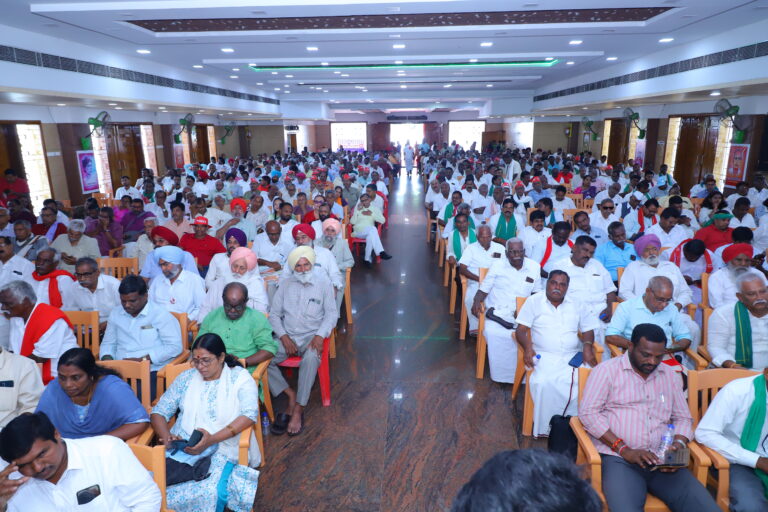
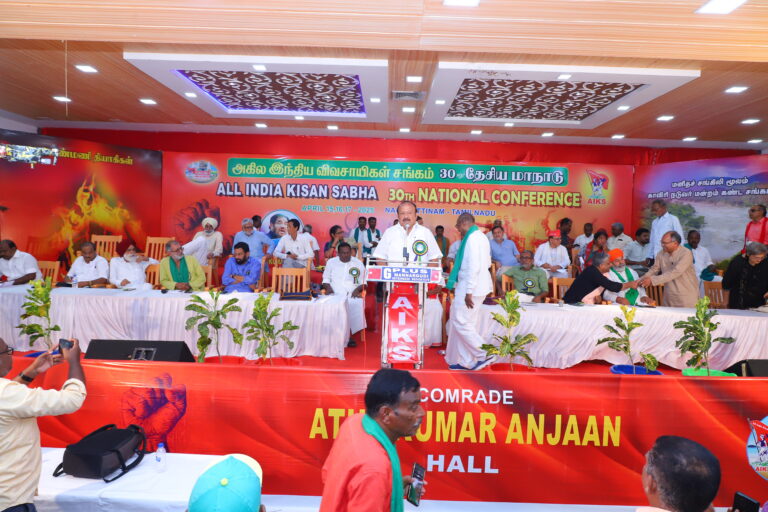
The All India Kisan Sabha was formally established at the Lucknow Kisan Conference (11–13 April 1936) under the leadership of Swami Sahajanand Saraswati with participation from farmer organizations across India.
1937–1940 – Expansion of the Farmer Movement
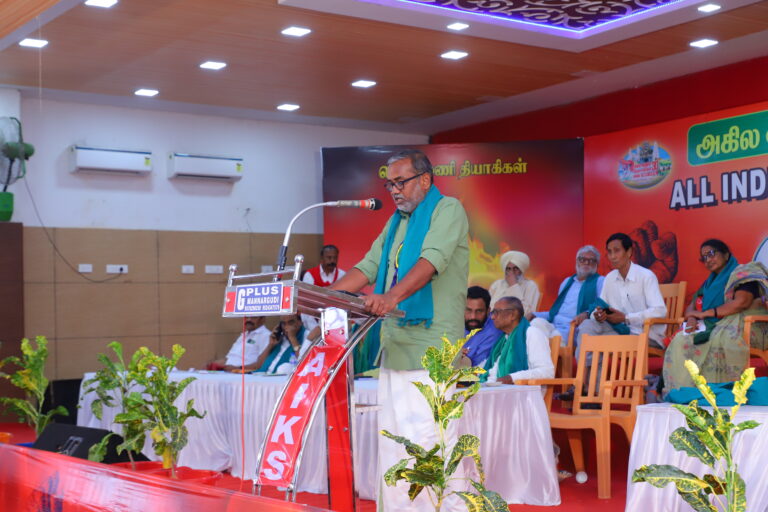
AIKS expanded rapidly across provinces, organizing large farmer conferences, protests, and campaigns for land reforms and debt relief.
Post-Independence Era – Continued Farmer Advocacy
AIKS continued its role in advocating for land reforms, farmer rights, fair crop prices, and rural development across India.
Present Day – Strengthening Farmers’ Voices
Today, the organization continues to unite farmers, support sustainable agriculture, and advocate policies that protect farmer livelihoods and food security.
Our Heros


Our Objectives
Our organization works with a clear set of goals to support farmers and rural communities:

- Protect the rights and dignity of farmers and agricultural workers
- Promote fair land ownership and land reform policies
- Advocate for fair crop prices and economic security for farmers
- Eliminate exploitation by landlords, middlemen, and unfair systems
- Encourage sustainable and environmentally responsible farming
- Strengthen farmer organizations and grassroots movements
- Raise awareness about farmer issues, rural development, and food security
- Support policies that improve rural livelihoods and agricultural infrastructure